

Northeast Wisconsin Real Estate Market Report
November 2026
What Buyers and Sellers Should Know Heading Into the Holiday Season
The Northeast Wisconsin real estate market continues to move at a pace that gives buyers and sellers opportunities, but the strategy that makes sense can look different from one property to the next.
Current residential market data shows an average of 61 days on market, a median of 41 days, an average sale price of $374,361, and a median sale price of $335,000.
Real estate is highly local, and factors like neighborhood, price range, property condition, inventory, and buyer demand can all change the picture. So what does the market actually mean for you?
Northeast Wisconsin Real Estate by the Numbers
Average Days on Market: 61
Median Days on Market: 41
Average Sale Price: $374,361
Median Sale Price: $335,000
What do these numbers tell us?
The difference between average and median numbers is worth paying attention to.
The median sale price of $335,000 means half of the homes included in the data sold for more than that amount and half sold for less. The average sale price is higher at $374,361, which can be influenced by higher-priced properties included in the overall data.
The same idea applies to days on market. While the average is 61 days, the median is 41 days, meaning the typical property in the data set is selling faster than the average might initially suggest.
For buyers, that means there are opportunities to take your time and compare properties, but desirable homes can still move quickly.
For sellers, it means pricing and presentation matter. Buyers have more information and more opportunities to compare homes, so a property needs to be positioned thoughtfully from the beginning.
Is It a Buyer's Market or a Seller's Market?
The simplest answer is: it depends. A $200,000 home in one neighborhood can experience completely different demand than a $600,000 home across town.
Buyers may have more time to evaluate their options than they did during competitive periods. Depending on the property, that can create opportunities to negotiate on price, inspections, repairs, or other terms.
At the same time, a well-priced home in a desirable location can still attract strong interest and potentially multiple offers.
For sellers, the takeaway is not that the market has disappeared. It's that buyers are paying attention to value.
A strong price, thoughtful preparation, good photography, and a marketing strategy that reaches the right buyers can make a meaningful difference.
What This Means for Buyers
You may have more time to think.
A home sitting on the market for several weeks doesn't automatically mean something is wrong with it.
Buyers can use that additional time to compare properties, think through their priorities, and make sure a home actually fits their needs.
That doesn't mean waiting forever, though. If the right home comes along and it's priced appropriately, being prepared still matters.
Look beyond the list price.
The purchase price is only one part of the cost of owning a home.
Buyers should also consider property taxes, homeowners insurance, utilities, maintenance, potential association fees, and the cost of future repairs or improvements.
Your lender can help you understand your financing and estimated monthly payment, while your real estate agent can help you evaluate the property itself and the local market.
Don't make your entire decision around mortgage rates.
Mortgage rates are an important part of affordability, but they aren't the only factor that should determine whether buying makes sense.
Rates can change over time, and no one can reliably predict exactly where they'll be in the future.
As of November 16, 2026, publicly published Wisconsin mortgage-rate data was showing 30-year fixed rates around the 7% range, though actual rates vary significantly based on loan type, credit profile, down payment, lender, points, and other factors.
The better question isn't simply "will rates go down?", it's "does buying make sense for my situation at the payment I can comfortably afford today?"
What This Means for Sellers
Pricing matters more than ever.
Buyers can compare homes quickly, which means an unrealistic asking price can cause a property to sit while competing listings attract attention.
Your home's value should be based on current comparable sales, current competition, location, condition, upgrades, and other property-specific factors.
A home that is priced correctly from the beginning can often create more interest than one that starts high and requires multiple price reductions later.
Preparation can make a difference.
You don't necessarily need to renovate your entire house before selling.
Focus first on the things buyers are likely to notice: deferred maintenance, chipped paint, clutter, cleanliness, obvious repairs, curb appeal, and anything that could distract from the home's strongest features.
Your agent can help you decide which improvements are worth making and which ones may not provide enough return to justify the expense.
Winter doesn't mean the market stops.
There is often a perception that you should automatically wait until spring to sell. Spring can bring increased activity, but waiting isn't necessarily the best choice for every homeowner.
Selling during the colder months may mean fewer competing listings in some areas. But, it can also mean fewer buyers, depending on the market.
The right timing depends on your property, your competition, your financial goals, and what comes next for you.
What Should Buyers Watch for This Winter?
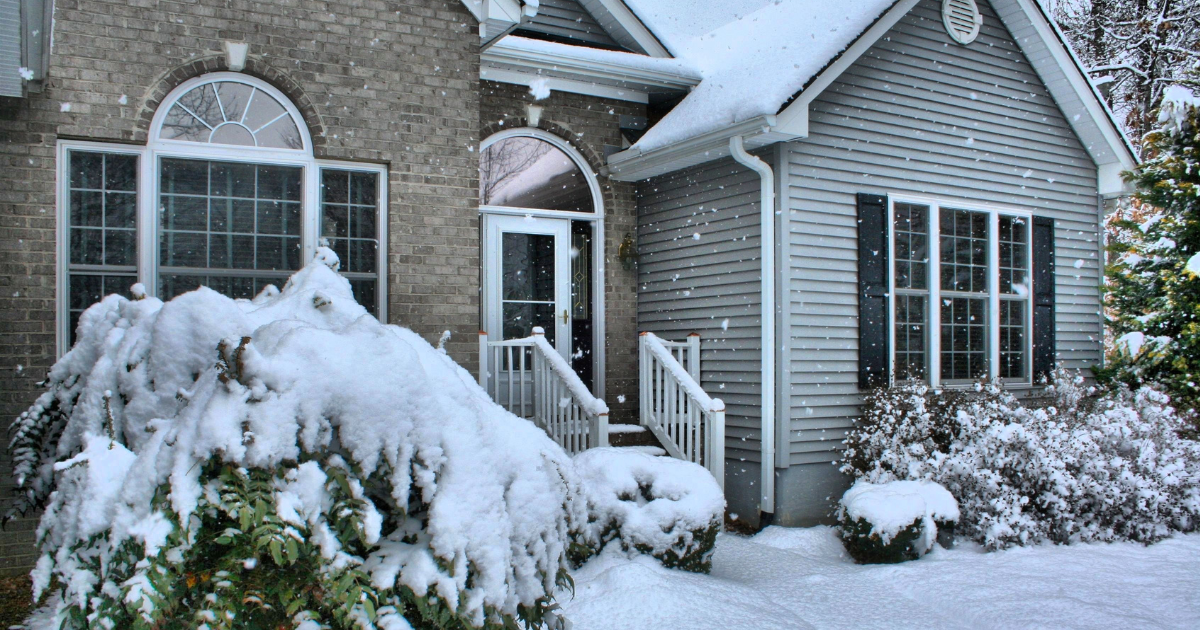
Winter can actually give buyers a different perspective on a property.
Pay attention to:
How the home is heated and whether the furnace appears properly maintained
The age and condition of the roof
Signs of ice damming or water intrusion
Basement moisture or drainage concerns
Window condition and drafts
Insulation and overall energy efficiency
Snow and ice management
The condition of driveways, sidewalks, decks, and exterior steps
A professional home inspection can also help identify issues that aren't immediately obvious during a showing.
What Should Sellers Do Before Listing?
If selling is on your radar, winter is a great time to start preparing rather than waiting until you're ready to go live.
Start with the basics:
1. Make a list of projects.
Walk through your home room by room and make note of anything that needs attention.
2. Declutter.
You don't have to make your house look empty. The goal is to make the space easier for buyers to picture themselves living there.
3. Gather important information.
Keep records of major updates, warranties, permits, utility information, and other documentation that may be helpful during the listing process.
4. Understand your competition.
Look at homes similar to yours that are currently for sale and recently sold. (An agent can help run a comparative market analysis to get you a better idea!)
5. Talk to an agent.
You don't have to commit to listing tomorrow. A conversation can help you understand what your home could potentially sell for, what preparation makes sense, and what timing might work best.
How Do I Know What My Home Is Worth?
An online home-value estimate can be a useful starting point, but it can't account for everything that makes your property unique.
A comparative market analysis looks at similar homes that have recently sold, current competition, location, condition, size, features, and other factors that can influence value.
That's why two homes with the same number of bedrooms can have very different values.
If you're curious what your home could sell for in today's market, we'd be happy to take a look.
Should I Buy Now or Wait Until 2027?
There isn't a universal right answer. If you're financially prepared, have a clear idea of what you want, and find a home that fits your needs and budget, waiting solely because you hope the market will become more favorable can come with its own risks.
On the other hand, if your finances aren't ready or you aren't sure what you want, there's nothing wrong with taking more time. Real estate decisions should be based on your personal circumstances, not just a prediction about what the market might do next.
What We're Watching Heading Into 2027
As we head toward a new year, we'll be keeping an eye on several things:
Inventory: How many homes are available for buyers to choose from.
Days on market: Whether homes are continuing to take longer to sell or moving more quickly.
Sale prices: Whether prices remain stable, increase, or begin to shift across different price ranges.
Affordability: How home prices, mortgage rates, taxes, insurance, and other ownership costs affect buyers.
Local differences: Northeast Wisconsin isn't one single market. Green Bay, Appleton, Manitowoc, Shawano, Door County, and surrounding communities can all experience different conditions.
Frequently Asked Questions
Are home prices going down?
There is no reliable way to guarantee where prices will go next. Real estate values are influenced by supply, demand, interest rates, employment, inventory, buyer behavior, and local conditions.
The most useful way to evaluate a home's value is by looking at what is happening with comparable properties in that specific area and price range.
Is winter a good time to buy a house?
It can be! Winter offers buyers a chance to explore properties with less seasonal competition, while also providing an opportunity to see how a home performs during colder weather.
There are a lot of buyers that hold off on a home purchase around the holidays and in the cold, so with less competition, you have more room to negotiate.
Is winter a good time to sell?
There may be fewer competing listings in some areas, but buyer activity can also be more seasonal.
Rather than automatically waiting for spring, consider your specific home, local competition, timing, and financial situation.
Should I wait for interest rates to drop before buying?
That's a personal financial decision. But when rates are higher, there's less competition, which makes the market favor buyers a bit more, sin
Instead of trying to perfectly predict rates, consider whether the purchase works within your budget at today's financing conditions.
How can I find out what my home is worth?
A comparative market analysis can give you a more useful picture than a generic online estimate.
It considers comparable recent sales, current competition, location, condition, upgrades, size, and other property-specific factors.
Thinking About Buying or Selling?
You don't have to have everything figured out before reaching out.
Sometimes the first step is simply asking a question, looking at what's available, or finding out what your home might be worth.
At Take Action Realty Group, we believe real estate should start with a conversation, not pressure. Whether you're buying your first home, thinking about selling, considering an investment, or simply trying to understand what's happening in the market, our team is here to help you make sense of your options.
Ready to take the next step?
Market Data Disclaimer
Market statistics are provided for informational purposes and may vary based on the geographic area, property type, reporting period, and data source used. Real estate conditions can change quickly, and individual properties may perform differently from broader market averages. Mortgage rates are subject to change and vary based on borrower qualifications, loan program, lender, and other factors. This information is not intended to provide lending, financial, or investment advice.
Check out this article next