


Most agents think the fix for stalled production is more hustle. It isn't. On my podcast, Why Do I Suck as a Real Estate Agent, I spoke with Karen Briscoe of 5 Minute Success, a $2 billion producer who turned consistency into a repeatable system instead of a personality trait. This one's for the agent stuck between overworking and never gaining traction.
Here’s a preview of that episode:
The Five-Minute Habit Behind an Eight-Figure Career
Karen didn't build a $2 billion career off an 80-hour grind. She built it off a five minutes a day success habit, a small, non-negotiable daily commitment to personal or business development that compounds the same way one percent weekly improvement adds up over a year.
The idea came out of necessity. After her business partner passed away the same month the market crashed in 2008, Karen rebuilt her team and started coaching agents informally. The same excuse kept coming up: no time. So, she shrank the commitment to its smallest possible unit, small enough that nobody has a real reason to skip it, but consistent enough to snowball on its own.
It's worth hearing Karen walk through this in her own words.
Watch the full episode here:
The Four Pillars That Turned Consistency into a System
Karen didn't leave the idea vague. When her coach pushed her to define what actually happens in those five minutes, she sketched four pillars on a napkin.
The first is commitment to lead generation, not "I might try this," but an actual commitment to prospecting. The second is a real process for converting that lead into a transaction. The third is leverage and systems so the business doesn't reset to zero after every deal. The fourth, foundational to the rest, is mindset: thinking, activity, and vision.
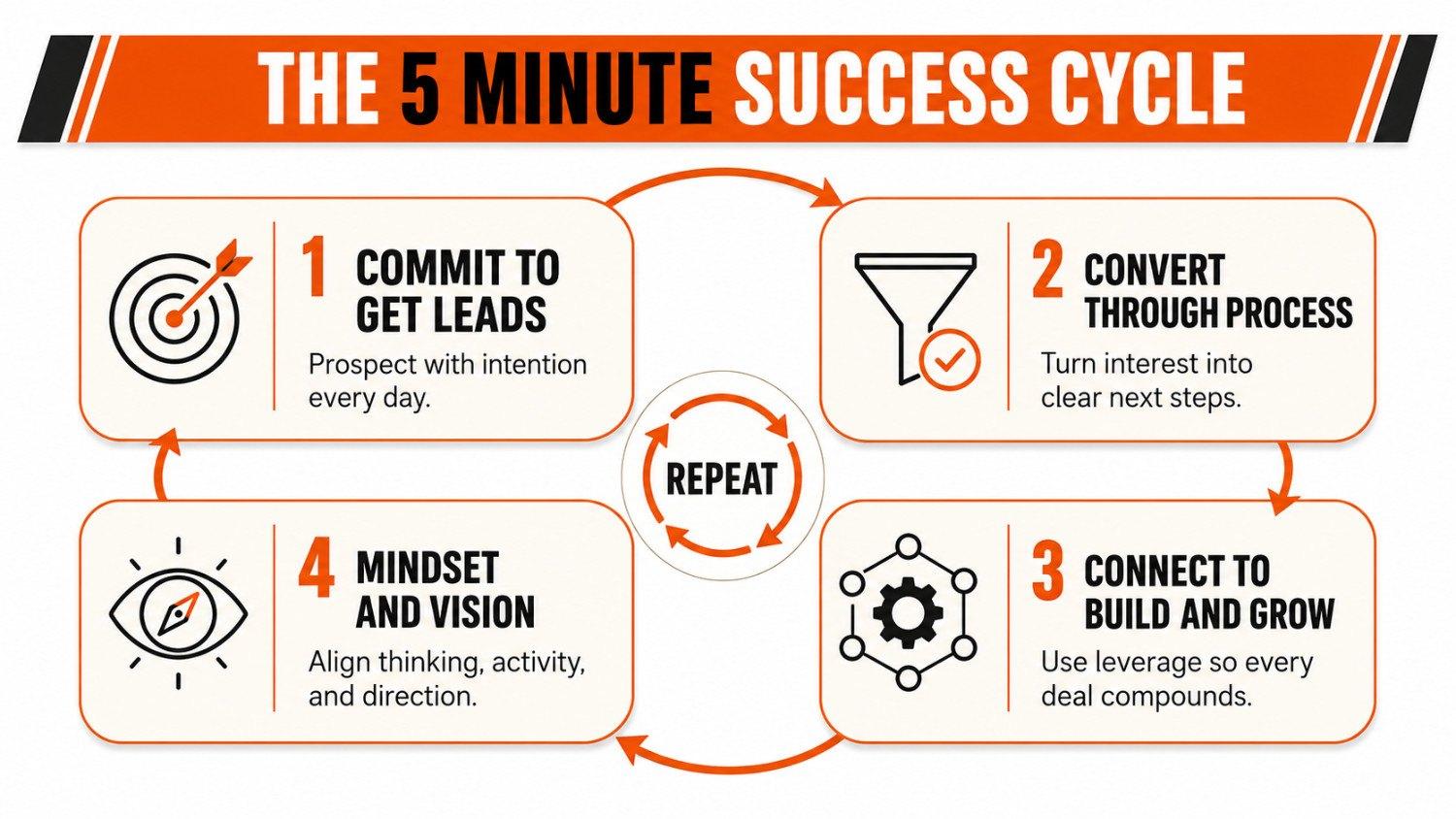
Karen treats these as a loop, not a checklist. Plenty of agents are excellent at closing but reset to zero the moment a deal is done, chasing the next one on the same treadmill, which is exactly what the third pillar is built to break.
Reading a Market Shift Before It Shows Up in the Headlines
I asked Karen how an agent who's lived through multiple cycles reads a shift before everyone else panics. Her answer wasn't about headlines or rates. It was absorption: how quickly homes in a segment are actually selling, tracked closely enough to notice the trend early.
That's a real market shift strategy for real estate agents: watching your own pipeline instead of reacting to the news. Where agents get stuck, Karen said, isn't reading the shift. It's having the uncomfortable conversation once they see it.
"He goes, 'Yeah, it's not selling.' I'm like, 'Well, your price is too high.' 'Well, how do you know?' I'm like, 'Because your price is too high. If it was right, you would have had this many showings, and you would have had this much interest, and you don't.' And so as soon as they made a price adjustment, then they started attracting, and he goes, 'Man, it just changed overnight.'"
She talks to sellers in percentages rather than dollars, because that's closer to how buyers perceive value. Karen compares today's market to 2006 more than 2008: more inventory, buyers taking their time, but still favoring sellers in her area. What matters isn't whether it's shifted. It's how long the shift lasts.
The “Who Not How” Mindset Behind $2 Billion in Sales
One of the most useful things Karen said all conversation was about her first year in residential real estate, when her broker pointed out her 12 sales worked out to a house a month and suggested a house a week instead.
"My brain then said, well, who does that? And then I went directly to that person and said, 'I want to sell a house a week too. How did you do it?' She goes, 'Yeah, well, okay, you know, whatever.’ But she said, ‘You can come work on my team.'"
Instead of figuring out a new process alone, Karen found someone already doing it and stood directly next to them. That instinct (who, not how) became the foundation of her coaching years later.
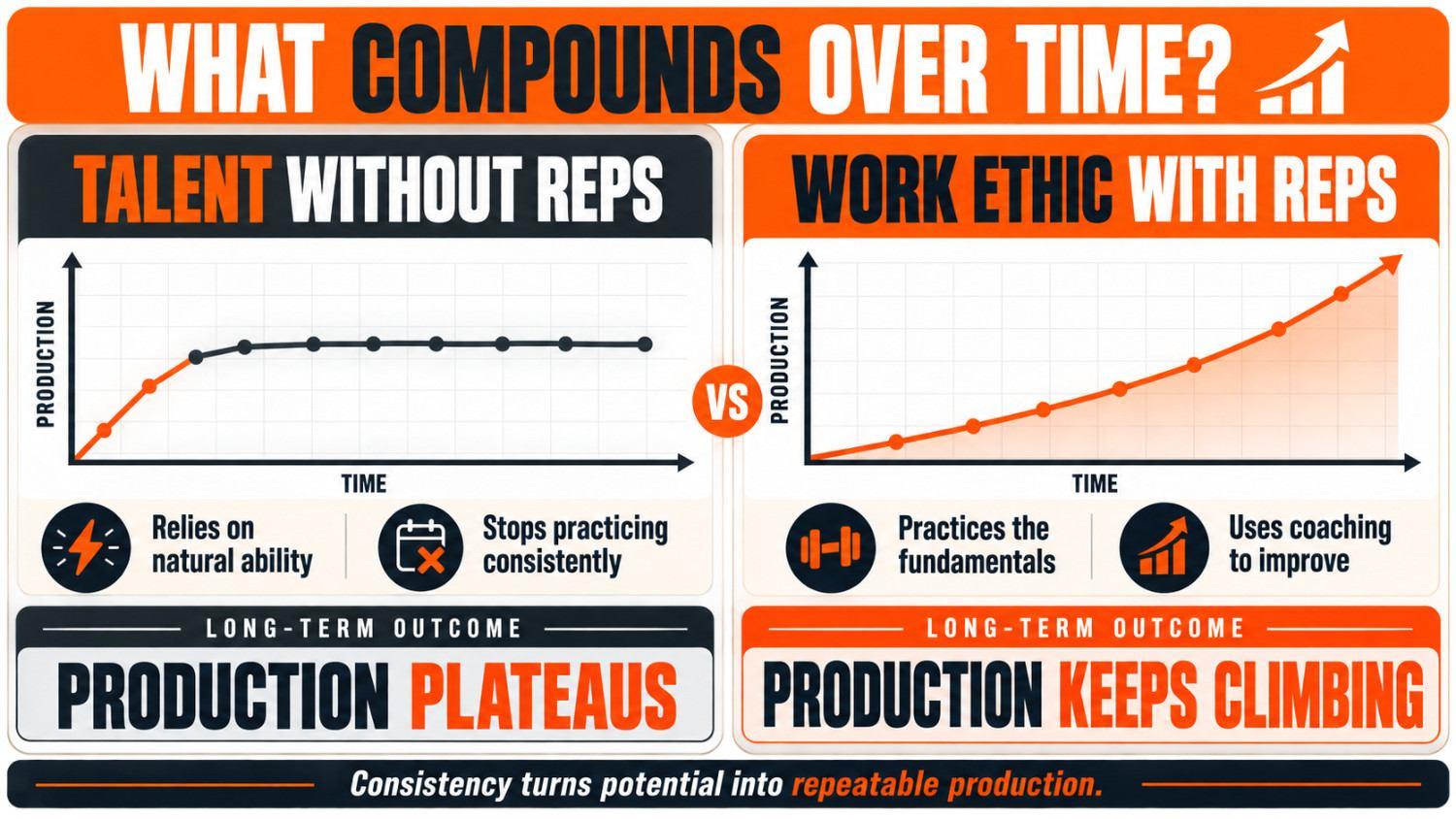
It's also why she'd rather coach someone with a strong work ethic versus talent in real estate. Talent without reps plateaus; work ethic, paired with coaching, keeps climbing. Karen says she can usually tell early on whether someone's going to commit to consistent lead generation; no amount of tracking can manufacture that decision for them.
If you want to see how that concierge-style coaching works, Karen walks through it in her Up Level Coaching program, where she and her clients map out where they are, where they want to go, and how to close that gap.
Breaking the Shiny-Object Habit With a 66-Day Commitment
Nearly every agent has started a new habit on Monday and quietly dropped it by Wednesday. Karen's explanation is blunt: most people aren't actually committed; they're just trying it.
She points to a 66-day challenge for real estate agents as a rule of thumb. The first three weeks feel exciting. The next stretch is what she calls "the dip," where most people quietly quit right before the payoff shows up.
Karen lived this herself with social media, which she admits was genuinely hard at first. She committed to three full months before judging the results, and by the time she hit that mark, she was seeing real traction.
Most people don't fail at a new habit because it was wrong for them. They quit during the dip, right before the payoff was ever going to show up.
What This Conversation Changed for Me
I've watched agents wait for the market, the leads, or their circumstances to change before they commit to anything. One line from Karen changed that for me.
"She went to him and said, 'So when are you going to get Congress to lower interest rates?' And he said, 'When are you going to learn how to sell houses no matter what the interest rate is?' Because truthfully, houses sold then, too. It's a human need. The market will figure it out. So are you going to be one of the ones that figures it out, or are you going to be the one who's waiting for the circumstances to change?"
That's the gap Karen keeps coming back to. It almost always sits in an agent's own head, not in the market itself. When an agent tells me they can't hit a number, I now hear that broker's question instead: “Are they doing the reps, or waiting for something outside themselves to shift?”
Karen also pointed out that people are having babies, downsizing, and relocating every day regardless of what rates are doing. Focusing on those needs instead of the noise is what keeps an agent energized through a slow stretch.
It's why I keep pushing agents past what they think they can do. I built the independent brokerage I run today watching this pattern play out, and the same instinct applies to something as basic as selling homes in a market that's shifted under everyone's feet. Karen Briscoe of 5 Minute Success didn't hand agents a shortcut in our conversation. She handed them a five-minute starting point, which might be more useful.
Want to hear my full conversation with Karen on how she built an eight-figure career with just a simple system?
Frequently Asked Questions
What is the Up Level Coaching model created by Karen Briscoe?
A concierge-style coaching approach built around four pillars: lead generation, conversion, systems for growth, and mindset, tailored individually rather than delivered as a one-size-fits-all program.
How does the five minutes a day method actually work?
Agents commit five minutes daily to one small shift in mindset or practice. Those actions compound into higher production over time, especially paired with a 66-day commitment.
What's the biggest mistake agents make when the market shifts?
Avoiding the hard conversation: sellers who won't adjust price, and buyers who hesitate without seeing the real cost of waiting.
Apply as a Guest on Why Do I Suck as a Real Estate Agent?
Real estate is full of agents quietly figuring out systems that work, and most never get asked to share them. If you've built a process, a mindset shift, or a way of working that's moved your business forward, I want to hear about it!
Check out this article next