


Most brokers aren't lazy; they're just busy in every direction except the ones that actually move the business forward.
I had the pleasure of speaking with elite business coach James Short on my podcast, Why Do I Suck as a Real Estate Agent, where this 20-year coaching veteran breaks down exactly why that happens and what to do about it, including his time budget framework, wheel of life exercise, and how to hold a team accountable without micromanaging, aiming to help broker-owners and agents who feel like they're wearing every hat in the business finally get some traction.
Here’s a preview of that episode:
Why I Had This Conversation
Every broker I know is exhausted, and almost none of them can tell you exactly where their week went. That's the pattern I keep running into: agents and owners who are top producers, HR departments, bookkeepers, and janitors all rolled into one person, quietly sliding into broker burnout and wondering why growth has stalled.
That's exactly why I wanted James on my show. He spent close to two decades coaching real estate leaders in Australia and the US after building and selling a chain of fitness centers, and he's the guy who gets brokers to admit they're busy, not productive. He's coached over a thousand agency leaders, and wrote Leading Your Tribe to capture the framework he uses with them.
I brought James on because I see myself in almost every broker he describes, and I wanted a structured answer for stopping the burnout cycle before it wrecks the business I've built.
Watch the full episode here:
The Time Budget Framework That Exposes Where Your Week Actually Goes
James told me the number one thing every broker has in common is spinning wheels without traction, juggling ten priorities, and being unable to say which one actually moved the business forward last week.
His fix starts with a time budget framework: log every hour for two weeks before touching your calendar. Just like a bookkeeper asks you to track spending before setting a budget, James has clients track their time the same way, because we're creatures of habit and can't change patterns we haven't measured.
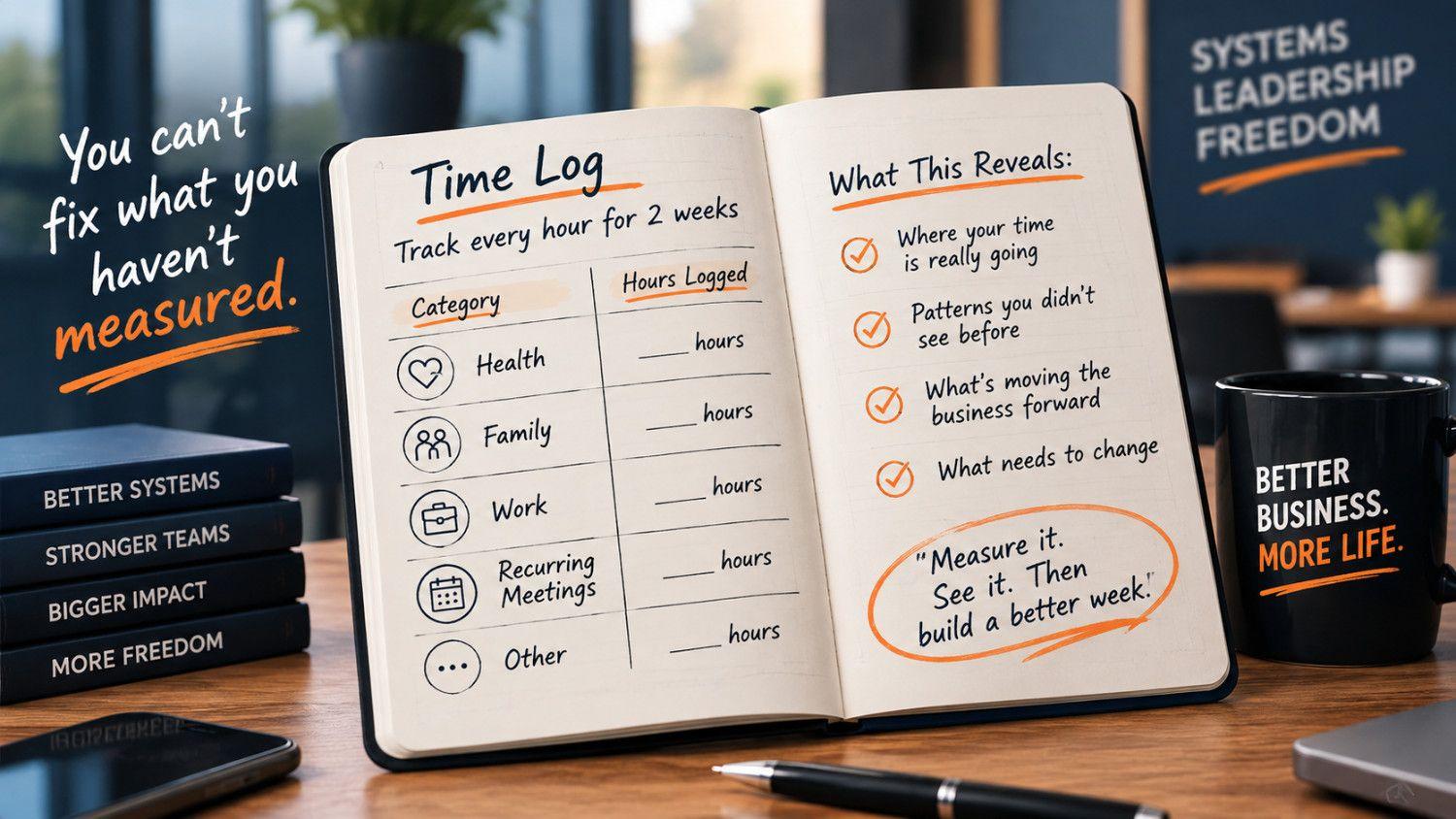
Once you know where your hours go, James has you build an ideal week around the big rocks: health, family, and recurring appointments, before you ever schedule a client call.
In our own brokerage, this hit home. Between listing and closing deals myself, I've done around 170 to 180 transactions over the last two years, and I still couldn't tell you where my hours went before this conversation.
The lesson stuck: you can't fix what you haven't measured.
Energy Management and the Wheel of Life Exercise
The next shift for me was understanding energy, not just time. Bookkeeping and calling on a deal demand two different energies: one wants detail and focus, the other charisma and momentum. Ping-ponging between the two is what leaves brokers wrecked by 5 p.m., even on a day that looked productive.
"When we can identify what those habits are, we can then start to make change. But unless you identify where those habits are of your time, then you can't actually create an actual budget to stick to."
To catch the areas quietly draining you, James uses the wheel of life exercise: scoring eight areas of your life, from health and family to finances and spiritual wellbeing, zero to ten every month. Plot the scores, connect the dots, and the imbalance is impossible to ignore.
He was direct about why real estate has such a high divorce rate: brokers pour everything into the business and let everything else go quiet. The wheel forces you to notice it before it becomes a crisis.
For me, that meant admitting health had been sitting at a three for months while I told myself the business justified it.
Breaking the Control Habit Through Team Accountability
The hardest habit to break as an owner is believing you need to know everything. James used the Henry Ford story: Ford couldn't answer detailed questions about his own accounts or manufacturing process in court, because he had specialists for that. The tension isn't really about knowledge; it's about control.
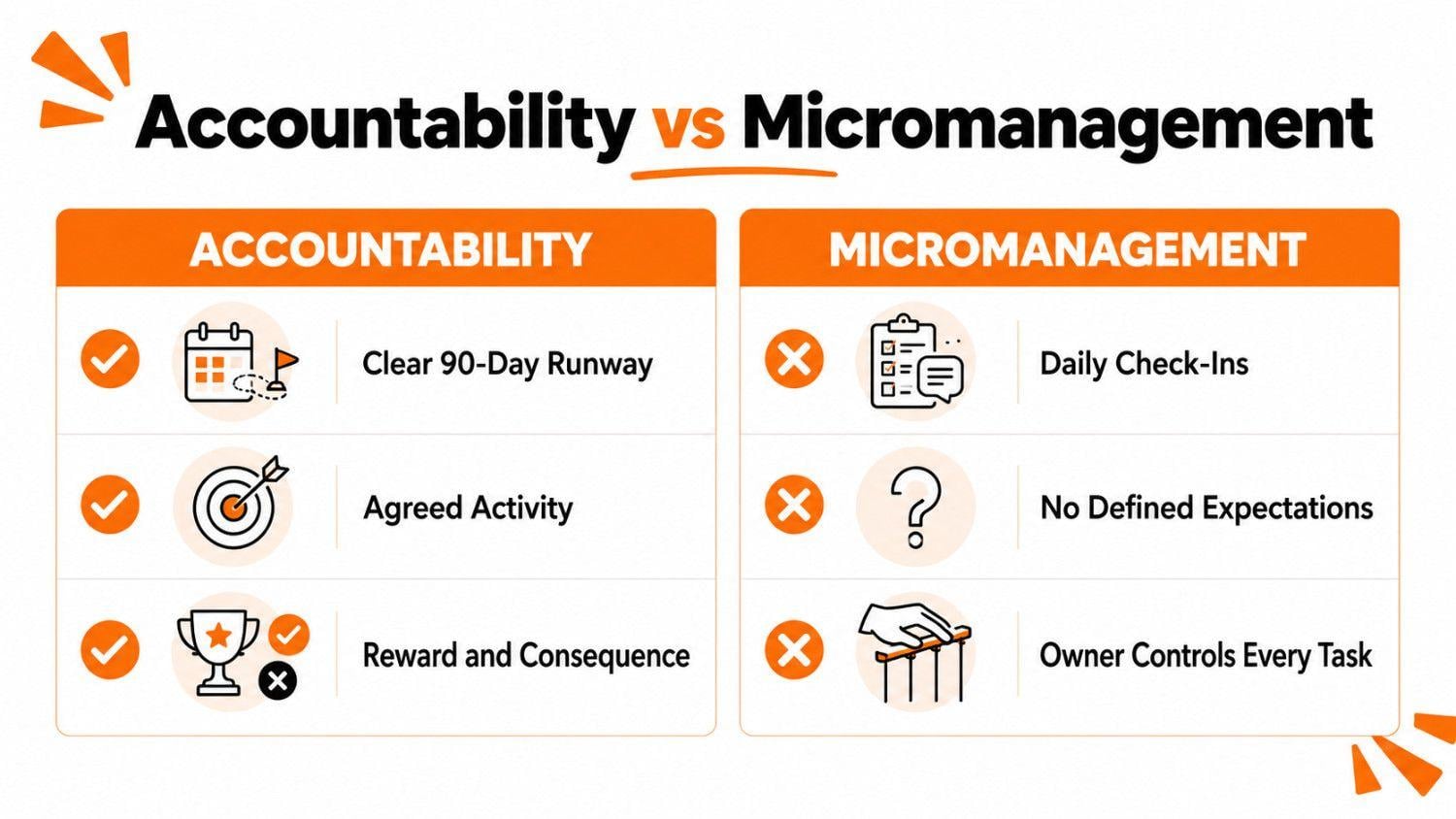
Real team accountability, James explained, means agreeing on the activity someone controls, calls, appointments, follow-ups, then building in a reward and a real consequence over a two-week sprint. One client who missed her call target had to hand her health retreat ticket to her biggest competitor with a handwritten note. She never missed her numbers again.
James also pushed back on setting thirty goals at once. His advice, which mirrors the structure behind his own 30-Day Goal Smashing Challenge, is to pick one goal for the month and let momentum compound instead of scattering focus everywhere.
That changed how I think about our own agent check-ins. We're moving from daily temperature checks toward a 90-day runway with clear expectations up front, so accountability doesn't quietly slide into micromanagement.
The Ultra Marathon Mindset for Scaling with Tech
James is genuinely excited about automation, especially around compliance, checklists, and marketing campaigns. But he was blunt that most brokers use maybe ten percent of their CRM and call it a shiny object problem instead of a training problem. The fix isn't buying another tool; it's scoping the risk and reward first.
What tied it together was his Ultra Marathon story. James ran 250 kilometers across Australia's Simpson Desert over four days, and said running that race is exactly like running a business: you don't sprint, you don't know what's around the next dune, and there's no finish line once you hit a goal, because you just set the next one.
"It's not where's the finish line. Because there is no finish line in business, 'cause once you've achieved the next goals, then you reset the next goals. But it's what's that next finishing line? So breaking those goals down into those bite-sized chunks and then chipping away at them one step at a time."
That's the mindset shift I needed. Scaling a brokerage is a string of check stations, and the next one is always close enough to reach if you stop trying to see the whole desert at once.
What Changed for Me After This Conversation
"Stop and let's have a few deep breaths. And then I'd ask them this: Why did you get into the business? Why is this important to you? And when we start with the why, things start to get clearer."
That question landed harder than I expected. I built Take Action Realty Group around the idea that I could out-work anyone, and most days I still can. But our conversation forced me to admit that being a producer, trainer, bookkeeper, and recruiter all at once isn't sustainable just because I'm capable of it.
I've started logging my own time and handed off bookkeeping instead of white-knuckling it. I'm also rethinking how much of my week goes to selling homes personally versus building systems that let my agents do more of that without me.
The biggest shift, though, is smaller than it sounds: I picked one goal for this month instead of the ten I usually try to juggle. James was right that momentum builds momentum. I'd rather finish one thing clearly than half-finish everything at once.
Want to hear my full conversation with elite business coach James Short on how real estate brokers can scale without burning out?
Frequently Asked Questions
What is the time budget framework James Short teaches?
Log every hour of your day for two weeks before making changes, so your real patterns become visible before you try to fix them.
How does the wheel of life exercise work?
Score eight life areas, including health, family, and finances, zero to ten each month, then focus on whichever one is dragging the rest down.
How do you hold a team accountable without micromanaging?
Agree on the activity someone controls, set a two-week sprint with a reward and a real consequence, and give people a 90-day runway instead of daily check-ins.
Apply as a Guest on Why Do I Suck as a Real Estate Agent
Real estate is evolving, and brokers are burning out trying to be every department at once. If you've also worked with a mentor like elite business coach James Short, or built a system that helped your team escape burnout, we'd love to hear from you!
Why Do I Suck as a Real Estate Agent is produced by Icons of Real Estate, the #1 Real Estate Podcast Network. If you are a real estate professional, apply to be a guest speaker across the network!
Check out this article next