


If you work with builders, you know how fast a new construction deal can get complicated. One missed detail about landscaping, one slow callback, or one unnecessary objection can turn a clean transaction into a mess.
That is why I sat down with Mike Lyon of Do You Convert. Mike has spent more than 25 years in real estate. Do You Convert works with 107 builders and manages $65 million in Google and Meta ad spend.
In this episode of Why Do I Suck As A Real Estate Agent, we got into what builders actually want from agents.
You’ll learn:
- Why builders still need agents, even when agents create friction
- What to research before showing new construction
- Why responsiveness earns trust
- Why the “set your own hours” pitch can be misleading
- How persistent follow-up turns interest into appointments
Check out the highlights here:
Why I Had This Conversation With Mike Lyon of Do You Convert

I have worked with builders from the buy side, so I have seen the tension Mike described. Mike Lyon’s real estate experience gives us another perspective on that relationship. Builders need agents, but they do not always enjoy working with us.
Mike explained that buyer agents are attached to roughly 50% to 70% of new-home deals in many markets. The relationship matters. The problem starts when an agent walks in without doing the homework and creates more work for everyone.
The Problem Is Friction, Not Representation
A good agent helps a client make a smart decision without creating confusion once the buyer has found a home that fits.
"The reality is in most markets, it's between 50% and 70% co-op rate, meaning there's a buyer's agent attached to this deal. Builders do need realtors if they want to tap into the market. We need the real estate professionals, we need the realtors out there. The problem is that most agents slow the deal down. They're gonna add friction into it instead of trying to remove it." — Mike Lyon, Founder of Do You Convert
If I am involved in a deal, I should make the process better.
Watch the full conversation here:
Good New Construction Agents Do Their Homework
One of the biggest problems for new construction real estate agents is treating every builder like they operate the same way. They do not.
Know What the Builder Actually Includes
Before I take buyers into a new construction property, I want to understand what they are really buying, because what comes standard in a new-construction home varies by builder. Some builders include air conditioning, poured concrete, or landscaping. Others do not.
That matters when the home is $450,000, but the buyer may need another $20,000 to $30,000 for landscaping, finished concrete, or another item that was not included.
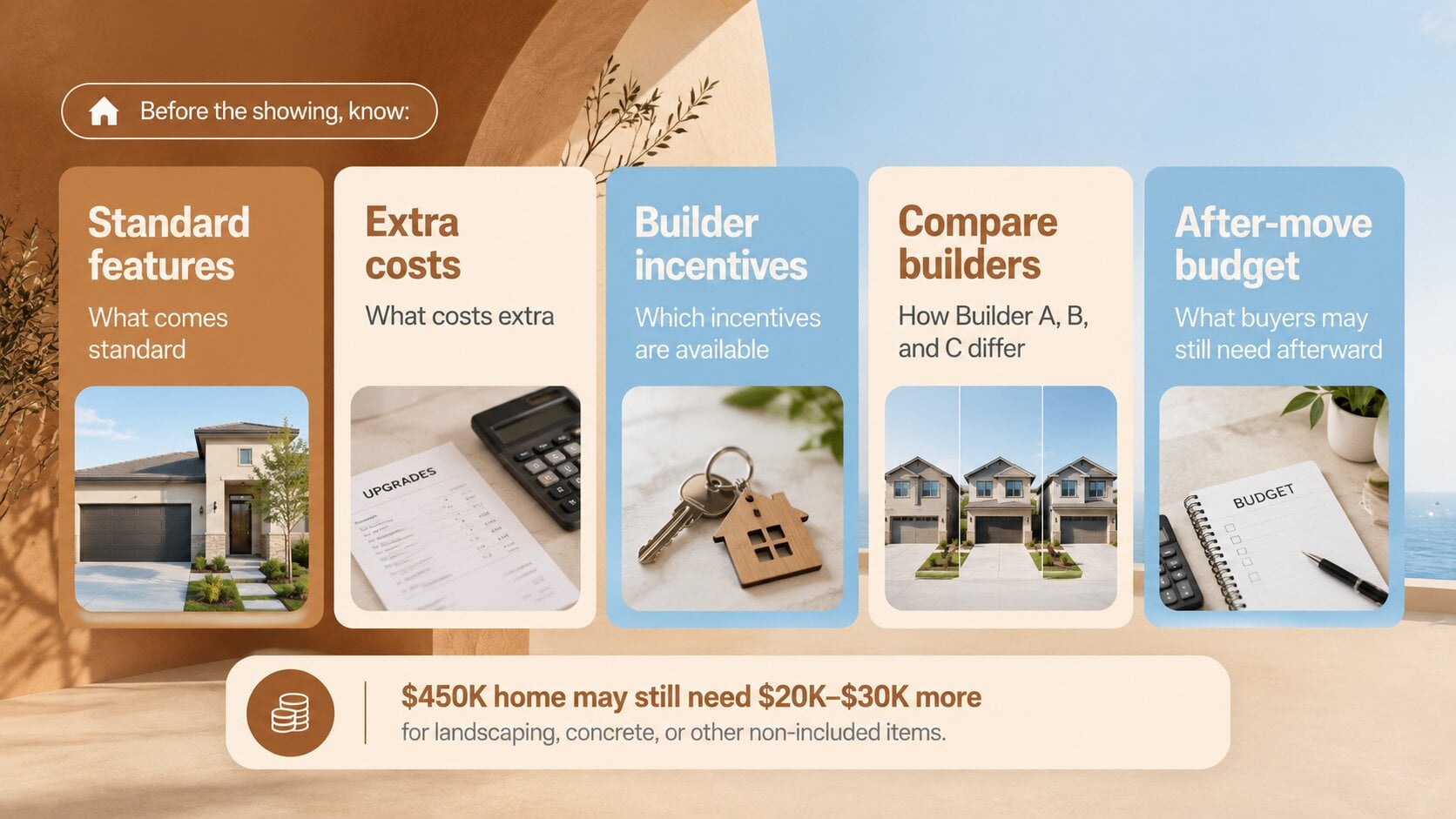
Before the showing, know:
- What comes standard
- What costs extra
- Which incentives are available
- How Builder A differs from Builder B or Builder C
- What the buyer may need to budget afterward
For real estate buyers searching for a home in Green Bay and Northeast Wisconsin, that preparation helps them compare the full picture.
Know When to Guide and When to Step Back
Once the buyer finds the right fit, I do not need to play hero.
The builder may already have a team guiding the next steps. My job is to protect the buyer and step in when my expertise is needed.
That is where preparation turns into professionalism.
Professionalism Is What Separates the Best Agents
When I asked Mike what an agent can do first to earn a builder's trust, his answer was simple: respond.
Responsiveness Builds Trust Fast
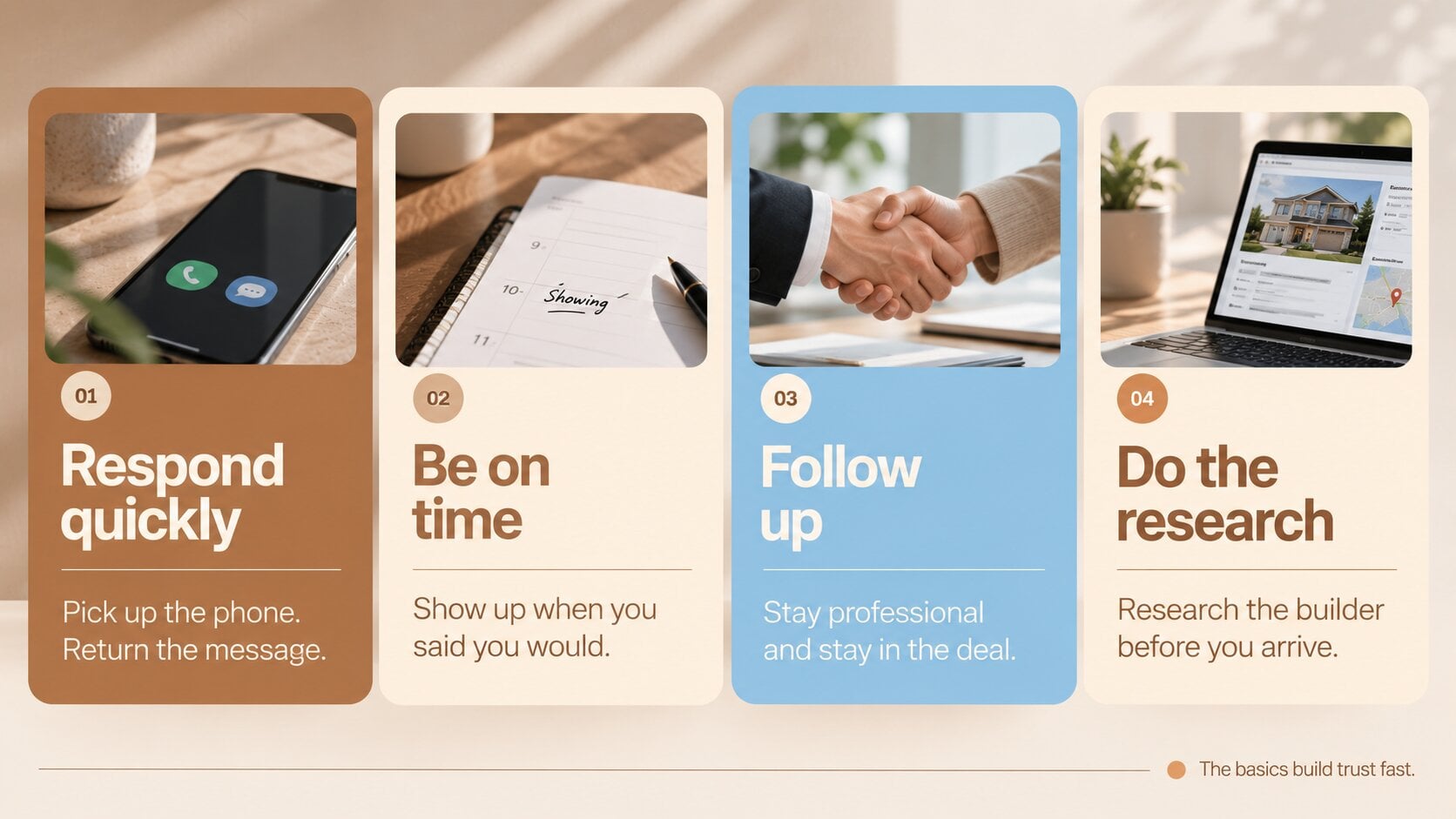
Pick up the phone. Return the message. Show up when you said you would. Follow up professionally. Do the research before you arrive.
Mike described poor responsiveness and reliability as a major problem.
The basics matter:
- Be responsive
- Be on time
- Follow up
- Research the builder
- Stay in the deal
Those habits matter whether I am representing a new build or helping someone review Green Bay and Northeast Wisconsin homes for sale.
Expertise Has to Go Beyond What Buyers Can Google
Buyers can find listings and property information themselves, but knowledgeable real estate agents can help buyers compare communities, incentives, financing options, and trade-offs that are harder to evaluate from a listing alone.
That is the kind of value Mike sees in the agents builders actually enjoy working with.
Treat Real Estate Like a Business, Not a Hobby
Mike also kept coming back to stamina. Rates can be high, homes can move slowly, and building a book of business takes time. He pays attention to agents who keep marketing after the sale instead of disappearing after closing.
That mindset also explains why the promise of instant flexibility can be unrealistic.
The “Set Your Own Hours” Version of Real Estate Is Misleading
A real estate license gives you permission to practice. It does not automatically teach you how to build a business.
Getting Licensed Is Not the Same as Learning Sales
Mike sees a gap between licensing education and the marketing and sales work agents need afterward.
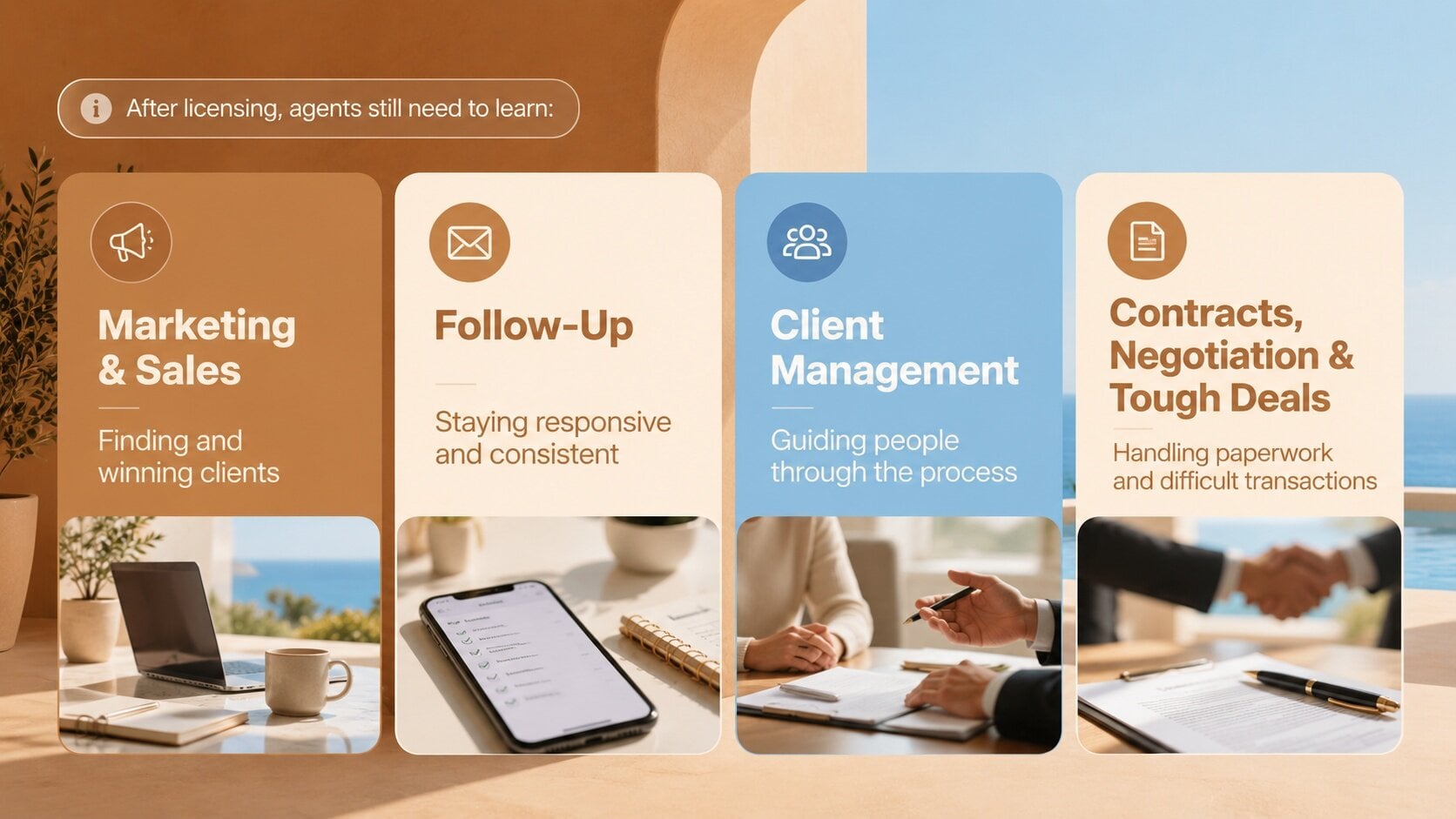
An agent still has to learn:
- Marketing and sales
- Follow-up
- Client management
- Contracts
- Negotiation
- What to do when a transaction gets difficult
"The dream is seductive. Sell one home a month, clear $100,000 a year, set your own hours. It just doesn't work like that. The pitch is get your license, make some side money, post a few reels on TikTok, farm your friends and family. But this job is marketing and sales full stop." — Mike Lyon, Founder of Do You Convert
Flexibility Usually Comes After the Work
Mike talked about agents getting calls at 7 p.m. from people who want to see 30 homes. He also said someone trying to make more than six figures may work 60, 80, or 90 hours a week for the first couple of years.
The opportunity is there. But the work has to be treated like a business first.
Once leads come in, the same discipline has to show up in follow-up.
Better Follow-Up Turns Interest Into Revenue
Do You Convert's home builder digital marketing work gives Mike a front-row seat to what happens after someone fills out a form or sends a message.
Leads Are Only Valuable When They Become Conversations
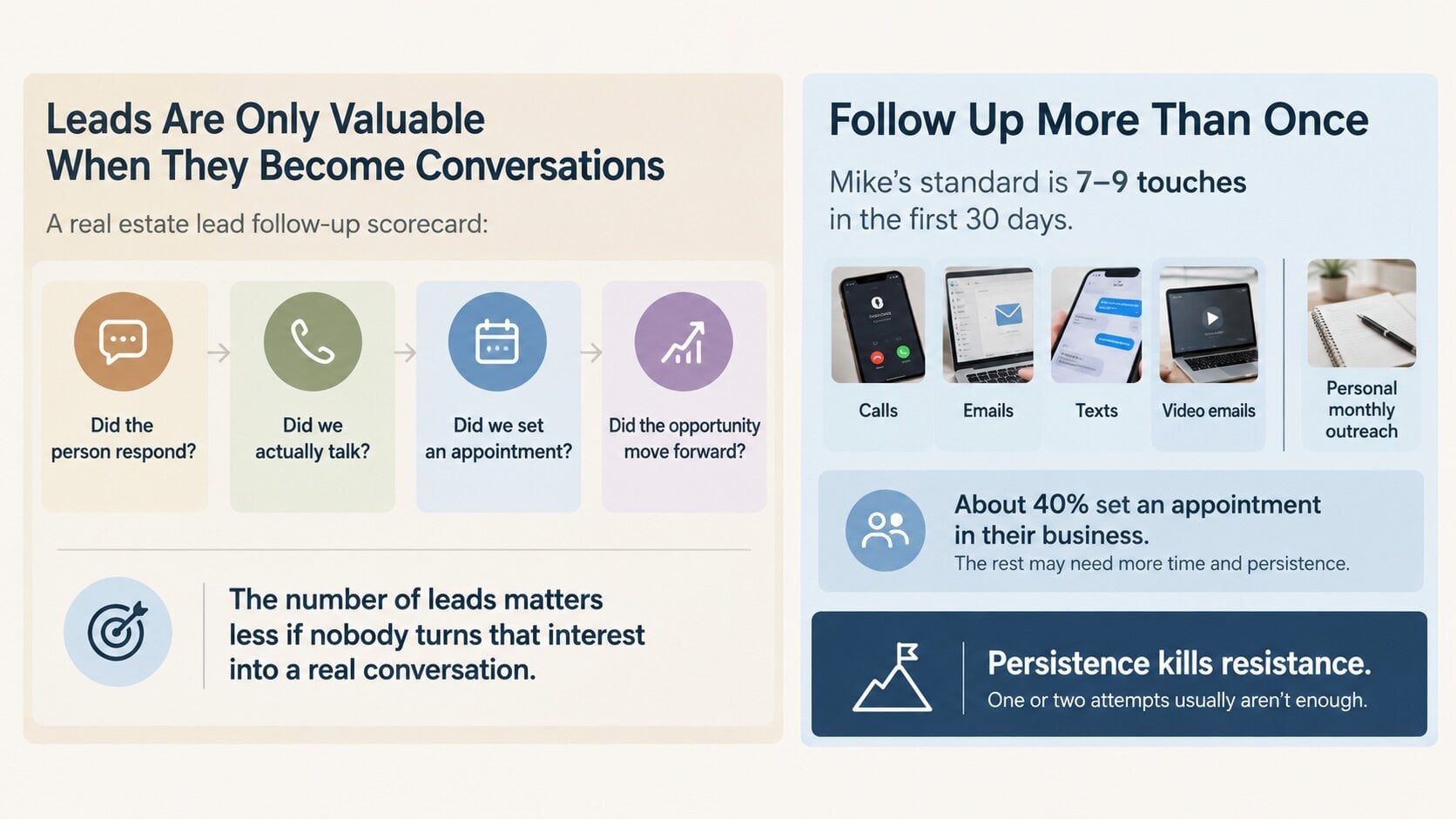
Generating leads is easier than turning them into appointments and sales. A better real estate lead follow-up scorecard is:
- Did the person respond?
- Did we actually talk?
- Did we set an appointment?
- Did the opportunity move forward?
The number of leads matters a lot less if nobody turns that interest into a real conversation.
Follow Up More Than Once
Mike's standard is seven to nine touches in the first 30 days. He uses calls, emails, texts, and video emails, followed by personal monthly outreach.
He said about 40% set an appointment in their business. The rest may need more time and persistence.
Mike summed up the mindset behind that follow-up in a simple phrase: persistence kills resistance. This short clip captures why one or two attempts usually are not enough.
That lesson brought me back to the bigger point of the episode: professionalism is not one big move. It is the habit of following through, staying responsive, and doing the work consistently.
What Changed for Me After This Conversation
My biggest takeaway is how simple professionalism looks from the other side of the transaction.
Builders want agents who come prepared, communicate, understand the product, set realistic expectations, and know when their expertise adds value.
For me, that means:
- Learn the builder before I bring the buyer
- Explain the true costs early
- Respond quickly
- Protect the client without manufacturing problems
- Stay useful after the transaction
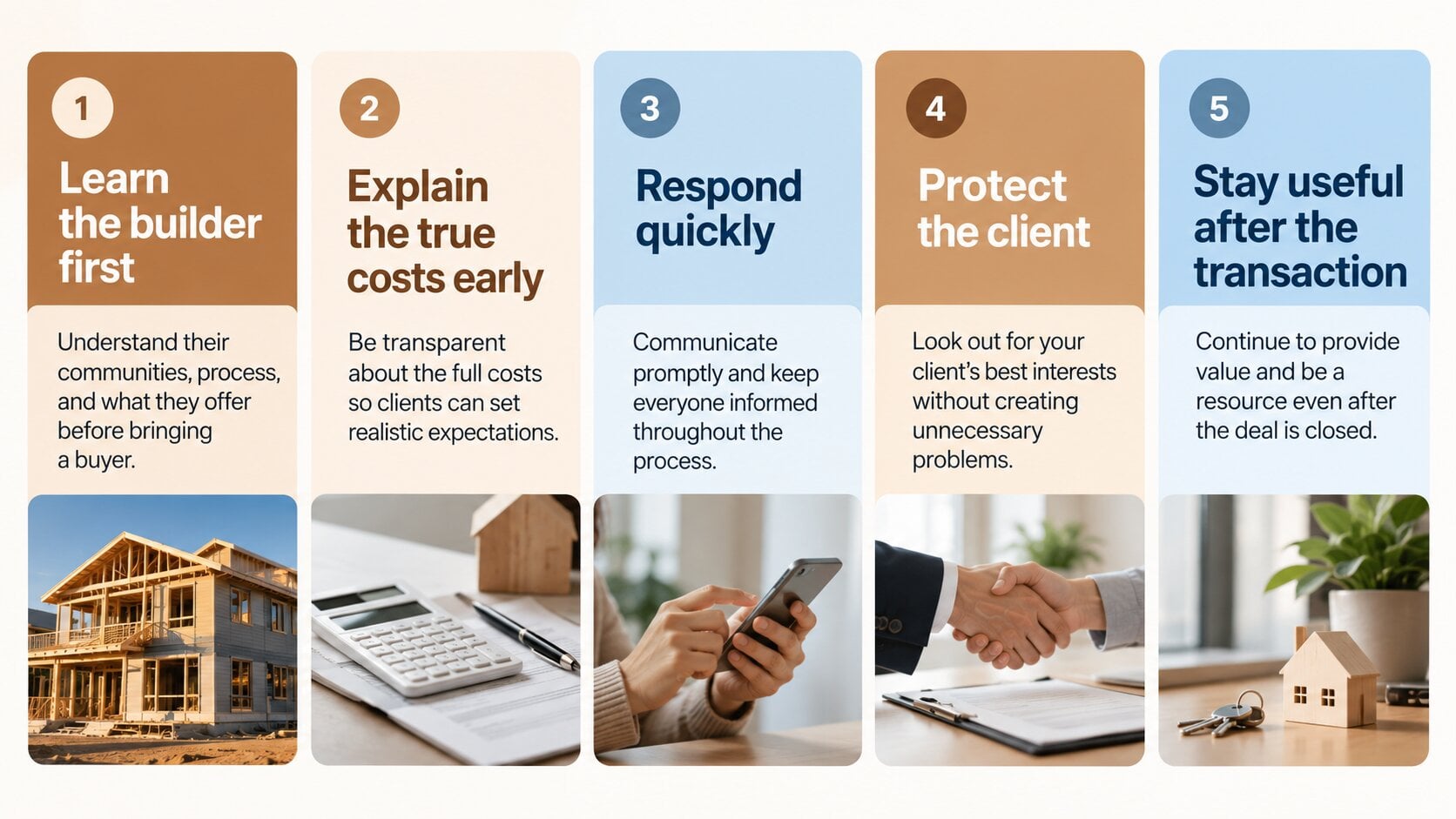
Strong agents become valuable because people know what to expect from them.
The goal is not to prove how involved I can be. The goal is to make the transaction better because I am involved.
FAQ Section
Why do home builders get frustrated with real estate agents?
Mike says the frustration often comes from agents adding friction. That can mean arriving without researching the builder, creating unnecessary confusion, slowing momentum, or communicating poorly. Builders still need agents, but they value professionals who make the process smoother.
How can agents become better at selling new construction?
Learn the builders in your market before you bring a buyer through the door. Know what is included, what costs extra, how each builder operates, and how new construction differs from resale. That preparation makes it easier to set realistic expectations before buyers get deep into the process.
How many times should a real estate lead be followed up with?
Mike recommends seven to nine touches during the first 30 days using calls, emails, texts, and video emails. After that, he recommends continued personal outreach, including monthly contact.
Keep the Conversation Going
If you want to improve online sales, lead conversion, and digital marketing for your home building business, reach out to Mike Lyon, President of Do You Convert:
- Website → https://www.doyouconvert.com/team/mike-lyon/
- LinkedIn → https://www.linkedin.com/in/mikelyon/
- Facebook → https://www.facebook.com/doyouconvert/
- YouTube → https://www.youtube.com/user/doyouconvert
- X → https://x.com/mikelyon
If something in this episode made you think, question, or laugh, don't let it stop here.
Follow me and stay part of the conversation:
- 🌎 Website → https://www.tarealtygroup.com/
- 📘 Facebook → https://www.facebook.com/montereygb/
- 📷 Instagram → https://www.instagram.com/montereyment/
- 🔗 LinkedIn → https://www.linkedin.com/in/montereyment/
You can also learn how to sell your home in Green Bay and Northeast Wisconsin or check how much your Green Bay and Northeast Wisconsin home is worth.
Apply to Be a Guest on "Why Do I Suck As A Real Estate Agent"
Conversations like this work because they bring in people who see the industry from a different angle and are willing to share what they have learned from actually doing the work.
If you serve the real estate industry through staffing, lending, brokerage, technology, advisory, home building, marketing, or another area, and you have practical insights that can help agents get better at what they do, I would love to hear from you.
Let's spotlight your experience and give other real estate professionals something useful they can take back to their own business.
Check out this article next