

You're making calls, following up with leads, and putting in the hours, but your real estate business still isn't growing the way you want. Meanwhile, other agents in your market are closing more deals with similar opportunities.
I sat down with Chris Heller of PLACE Real Estate on Why Do I Suck as a Real Estate Agent to understand that gap.
Chris is the former CEO of Keller Williams and former president of OJO Labs. He's also spent decades producing real estate results himself, including becoming the number-one Keller Williams agent in North America in 2009.
Our conversation covers how to:
- Build a daily schedule that protects revenue-generating activities.
- Improve sales conversations before spending more on leads.
- Turn unsuccessful listing presentations into learning opportunities.
- Strengthen client relationships through useful, personalized follow-up.
- Delegate responsibilities while developing the skills technology can't replace.
Check out the highlights here:
Why I Asked Chris Heller of PLACE Real Estate What Separates Top Agents From Everyone Else
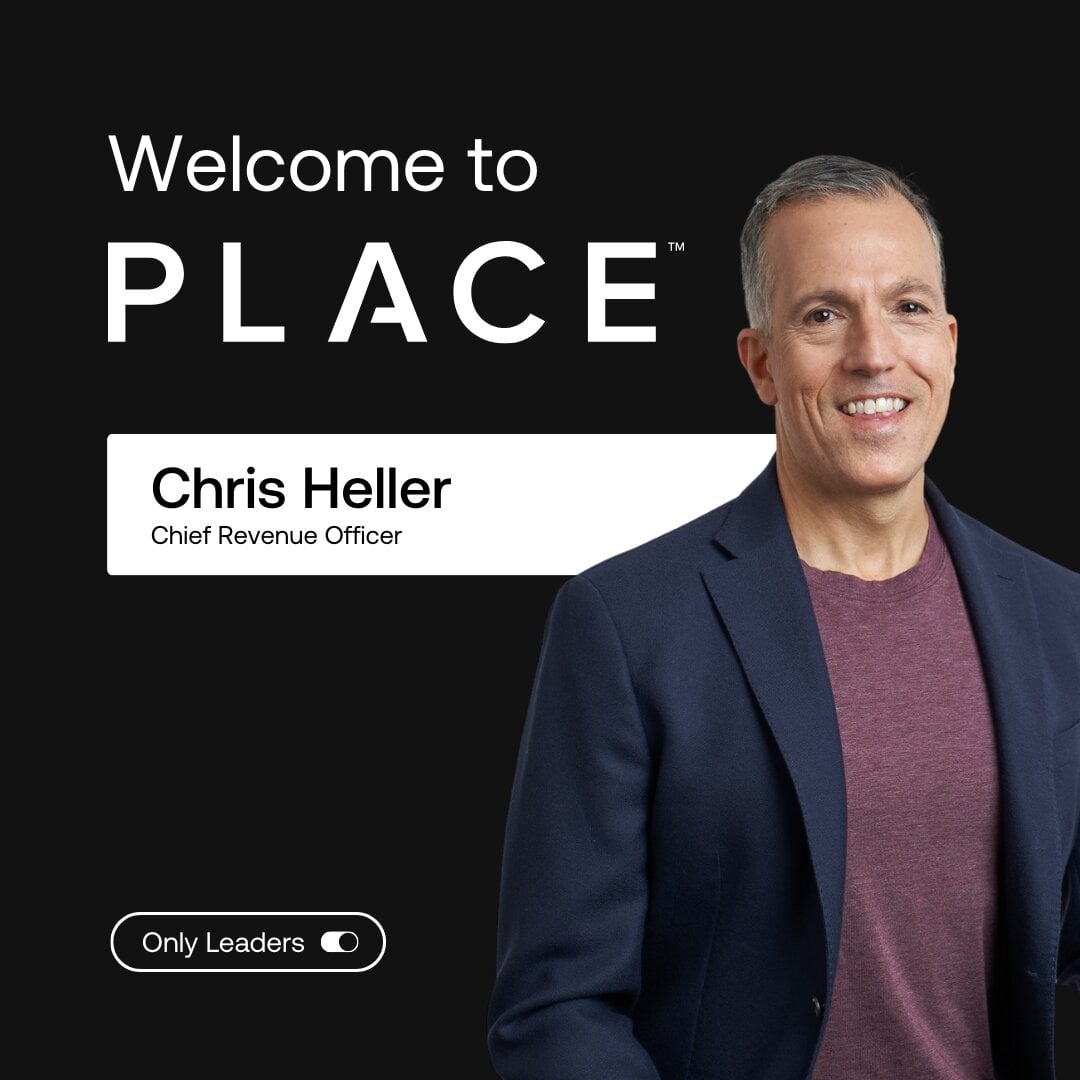
Chris entered real estate in November 1988 after selling timeshares. He originally considered starting a marketing company, but a broker convinced him to try residential real estate.
In 1989, Chris sold 27 homes and became San Diego's Rookie of the Year. He went on to sell more than 100 homes annually for over 20 years.
What interested me was how someone who describes himself as introverted developed that level of consistency.
I wanted to understand the habits that allowed him to produce those results, eventually move into executive leadership, and leave behind a team that continued selling homes without him.
Watch the full conversation here:
The 180-Degree Rule: Why Chris Heller Built His Business Differently
When I asked Chris how he became a top producer, he described what he calls the 180-degree rule.
He watched approximately 70 agents in his office and deliberately approached the business differently. He didn't want the financial difficulties he saw other agents experiencing.
His manager gave him a for-sale-by-owner (FSBO) prospecting script. Chris began calling homeowners selling without an agent, and 24 of his first 27 sales came from FSBO listings.
But those results required an exhausting schedule. He arrived around 6:30 a.m., often returned home after 7 p.m., and worked seven days a week.
He eventually hired an assistant to handle calls and paperwork. The following year, he sold 38 homes while working fewer hours.
The Daily Non-Negotiables That Built His Business
Chris explained that he focused on becoming both more efficient and more effective.
He organized his schedule and systems around three activities:
- Lead generation: Create opportunities consistently.
- Lead follow-up: Continue conversations with potential clients.
- Sales practice: Rehearse scripts and presentations to improve performance.
He also planned his schedule the night before.
| Efficiency | Effectiveness |
| Prepare tomorrow's schedule | Practice sales conversations |
| Create repeatable processes | Improve listing presentations |
| Delegate administrative work | Strengthen prospecting skills |
The distinction matters because a full calendar doesn't necessarily mean productive work.
I would start by protecting time for these three activities before allowing administrative tasks to fill the day.
Why Better Sales Skills Matter More Than Getting More Leads
One of Chris's strongest arguments concerned real estate lead conversion strategies.
At a previous company, he listened to thousands of recorded calls connecting consumers with agents. He found that many agents struggled with basic sales conversations.
"I think it's not a leads problem. It's not who you know. It's not what technology you're using. It's how effective you are when you have an opportunity. Every conversation is an opportunity, right? It's an opportunity for now business, it's an opportunity for future business, an opportunity for referral business." — Chris Heller, Chief Revenue Officer at PLACE
The lesson I took away is that every conversation deserves preparation. Harvard Business Review's research on common sales mistakes identifies poor listening and failure to follow customers' buying processes among the complaints buyers have about salespeople. Although the research examines business-to-business sales, it reinforces the importance of understanding the person you're speaking with.
Practicing Sales Conversations With AI
Chris introduced SalesGO AI, a tool offering 22 role-play scenarios, including cold calls, open houses, and buyer consultations.
AI role-play for real estate agents gives professionals another way to practice when a human partner isn't available.
For improving real estate agent sales skills, I'd recommend a simple routine:
- Choose one conversation you regularly struggle with.
- Practice responding to common questions or objections.
- Review where the conversation becomes awkward.
- Repeat the exercise before your next real prospect interaction.
The purpose is to develop the confidence to have a useful conversation rather than deliver a memorized speech.

What Chris Learned by Asking Clients Why They Didn't Hire Him
Chris admitted that his discipline eventually made him feel like a human robot.
He would deliver nearly identical listing presentations. Some sellers hired him immediately, while others seemed completely disconnected.
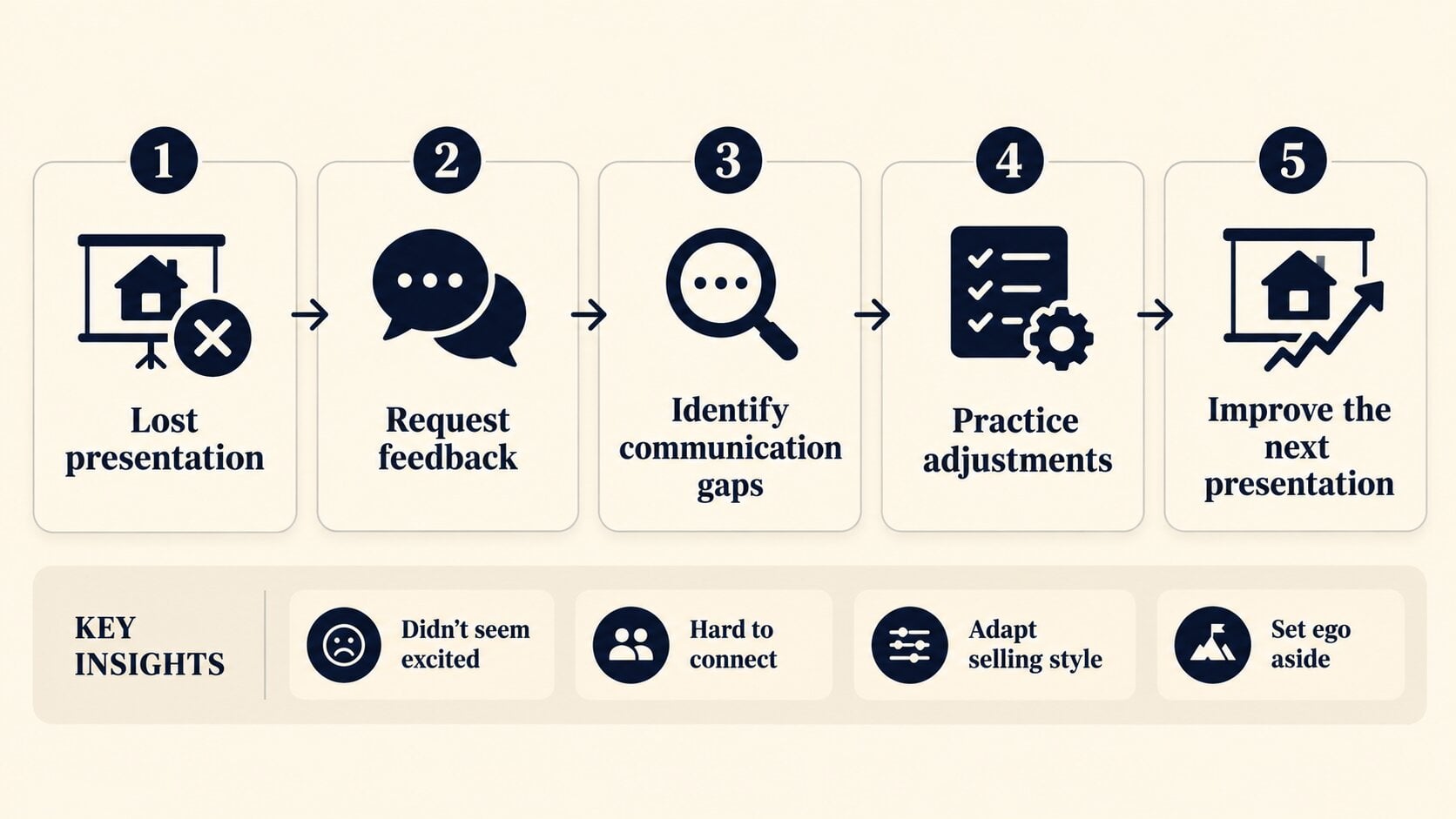
Rather than guessing why, he contacted the sellers who chose another agent and requested honest feedback.
Some said he didn't seem excited about their homes. Others struggled to connect with his personality.
That feedback helped him recognize that his selling style needed flexibility.
He began preparing himself to adapt to whoever opened the door, using the phrase "It's showtime" before listing presentations.
I found that especially valuable because asking for criticism requires setting your ego aside. As Harvard Business Review explains in its guidance on getting honest customer feedback, businesses need substantive customer input to identify ways to improve, even when customers are reluctant to provide it.
After losing a listing, consider this process:
Lost presentation → Request feedback → Identify communication gaps → Practice adjustments → Improve the next presentation
You may discover that your pricing explanation was clear but your personal connection was missing.
That brings us to a skill agents need even when they aren't actively presenting: building relationships.
Building Relationships That Make Clients Call You Before Google
Chris believes agents will continue competing with technology platforms for consumer relationships.
"I believe that the value of relationships isn't gonna change or go away. It's who has them that is gonna change. And there's no reason why any agent can't future-proof their business if they focus on building relationships, deepening the ones they have, providing value." — Chris Heller, Chief Revenue Officer at PLACE
For me, that means giving clients reasons to contact you beyond buying or selling.
Make Every Follow-Up Relevant
Chris criticized follow-up calls that simply check whether a buyer's plans have changed.
He suggested sharing specific information based on what the client previously wanted, such as upcoming single-story homes in a preferred neighborhood.
| Generic follow-up | Value-driven follow-up |
| Asking whether plans have changed | Sharing listings matching stated preferences |
| Calling without useful information | Providing relevant market updates |
| Repeating the same conversation | Continuing an earlier discussion |
When I help someone find a home in Green Bay or Northeast Wisconsin, I want follow-up to reflect what matters to that individual.
Build a Trusted Local Vendor Network
I also discussed building your own economy through trusted local professionals.
In the episode, I shared how a buyer received a high quote for window work. I connected him with a specialist who offered a substantially different option.
That relationship allowed me to provide help outside the transaction.
Agents can develop similar connections with electricians, plumbers, roofers, and other reliable professionals.
These relationships give clients a reason to call their agent before searching Google.
Why Human Connection Becomes More Valuable as AI Improves
Chris expects technology to keep changing how consumers find information and connect with real estate professionals.
But he emphasized something agents can practice right now: rapport.
He described matching and mirroring a client's rate of speech, tone, and volume to make conversations feel more comfortable.
The goal is to communicate in a way that feels familiar to the person you're helping.
Chris talks more about it here in this video:
Why Hyperlocal Expertise Still Matters
Chris owns properties in multiple locations and continues relying on local agents for their market knowledge.
An online search can provide property information, but local professionals can explain neighborhood conditions and how particular improvements might influence value.
For someone preparing to sell a home in Green Bay or Northeast Wisconsin, those details can shape important decisions.
I see technology as a useful support for research and preparation. Agents still need to develop the judgment, local understanding, and communication skills that help clients act on information.
Why Successful Real Estate Agents Narrow Their Focus as They Grow
Chris explained that as his business expanded, his personal responsibilities became increasingly focused.
"You never become really successful if you're spread too thin. By the time I stepped out of my business, I was only doing three things. Well, if you count following my schedule, that'd be four things. But really, I was doing lead generation and lead follow-up. I was presenting, and I was running the team." — Chris Heller, Chief Revenue Officer at PLACE
What Agents Should Delegate
Chris stopped personally handling several responsibilities, including marketing, administration, and negotiations.
His systems allowed the team to continue operating after he stepped away in 2010.
| Chris's core focus | Responsibilities he delegated |
| Lead generation and follow-up | Administrative work |
| Presentations | Marketing |
| Team leadership | Negotiations |
For agents, the lesson is to identify which responsibilities truly require their involvement.
How PLACE Supports Real Estate Teams
Chris described the PLACE real estate platform as providing services and technology to support agents and teams.
At the time of our conversation, he said PLACE worked with approximately 450 to 500 teams.
Its support includes marketing, HR, technology, training, and financial management. He also discussed Lever, a program serving solo agents.
This connects to the broader lesson of Chris Heller real estate leadership: developing people and systems that allow professionals to focus on their most valuable work.
What Changed for Me After My Conversation With Chris Heller
Chris's experience reinforced something I think agents should consider before spending more money on leads.
More opportunities demand the ability to handle them effectively.
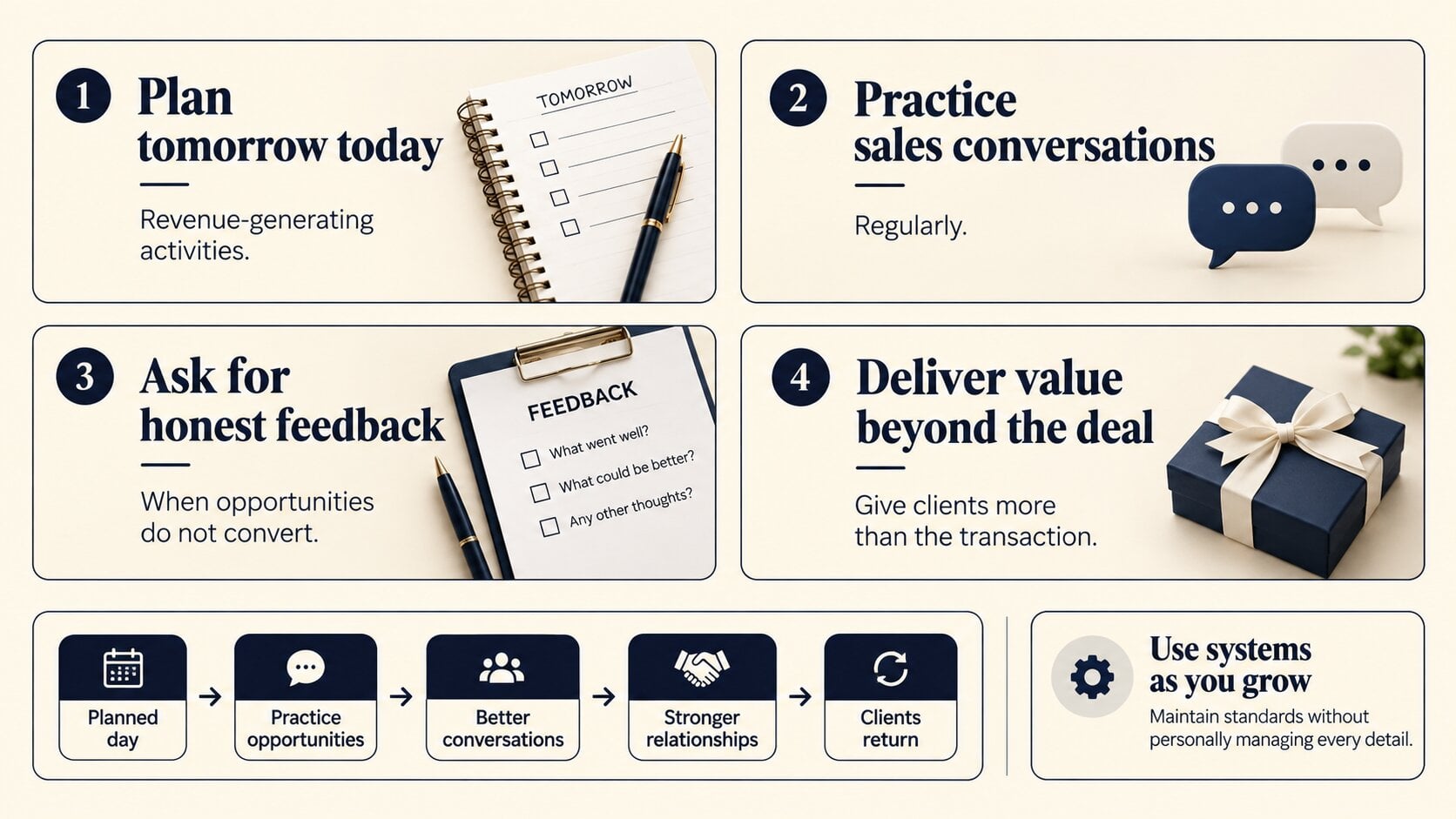
His approach gives me four practical habits worth emphasizing:
- Plan tomorrow's revenue-generating activities today.
- Practice sales conversations regularly.
- Seek honest feedback when opportunities don't convert.
- Provide clients with value beyond the immediate transaction.
For agents ready to apply those habits, consistency matters.
A carefully planned day creates opportunities to practice. Better conversations help build relationships. Stronger relationships give clients reasons to return.
And when the business grows, systems can help agents maintain those standards without personally managing every detail.
Frequently Asked Questions About Chris Heller and Real Estate Business Growth
Who is Chris Heller of PLACE Real Estate?
Chris Heller is the Chief Revenue Officer at PLACE and former CEO of Keller Williams. In our episode, he discussed his career as a top-producing agent and his transition into executive leadership.
Why do real estate agents struggle even with enough leads?
Chris believes many agents lack the sales skills and preparation needed to handle opportunities effectively. He recommends structured work habits and consistent practice.
What is the 180-degree rule in real estate?
Chris describes it as observing how other agents operate and deliberately choosing a different approach. For him, that meant following a schedule, developing skills, and creating business systems.
How can agents use AI to improve sales skills?
Chris discussed using SalesGO AI to practice common real estate conversations. Repeated role-play can help agents prepare for prospecting calls and consultations.
How can agents compete with Zillow, Redfin, and AI tools?
Chris emphasized relationships, communication, and hyperlocal market knowledge. I believe agents can strengthen these advantages by consistently providing relevant information and useful connections.
What is PLACE, and how does it support agents?
PLACE provides services and technology for real estate professionals, including support with marketing, operations, training, and business management. Chris also described its Lever program for solo agents.
Keep the Conversation Going
If you'd like to explore Chris's approach to sales skills, real estate leadership, or building a more efficient business, connect with Chris Heller:
- Website: https://place.com/
- LinkedIn → https://www.linkedin.com/in/place
I'd also love to keep the conversation going with you. Follow me for more discussions about the habits, challenges, and lessons that shape successful real estate careers:
- Website → Take Action Realty Group
- Facebook → My Facebook
- Instagram → My Instagram
- LinkedIn → Connect With Me
If you're exploring the local market, you can also browse Green Bay and Northeast Wisconsin homes for sale or find out how much your Green Bay or Northeast Wisconsin home may be worth.
Apply to Be a Guest on "Why Do I Suck As A Real Estate Agent"
Chris's experience shows how much real estate professionals can learn from the challenges and decisions behind another person's success. I want to keep bringing those practical conversations to agents who can use them.
If you've developed better ways to prospect, strengthen client relationships, lead a team, or help real estate professionals grow, I'd love to share your experience on the podcast.
Whether you work in brokerage, lending, staffing, technology, or advisory services, your lessons could help another agent approach their business differently.
Check out this article next